Digestive Health • Natural Remedies
How a Lagos Elder's Ancient Kitchen Wisdom Helped Me End 4 Years of Burning Ulcer Pain, Sleepless Nights & Food Fear — In Just 30 Days

If you are secretly suffering from that burning fire in your stomach, living in fear of your next meal, waking up at 2 a.m. with acid crawling up your throat, or spending money on antacids that stop working the moment you put them down — read every single word on this page.
I know exactly what your mornings look like.
You wake up and your first thought is not your children, your husband, your work, or your plans for the day.
Your first thought is your stomach.
You lie still for a moment, assessing. Is it bad today? Is the fire already starting? You reach for the antacid before your feet touch the floor. You have learned not to stand up too fast. You have learned not to eat before you are sure.
Breakfast is a negotiation. You cannot eat the things you love. Tomatoes, pepper, fried plantain, the spicy stew your mother taught you to make — all of them are now your enemies. You eat pap. You eat oats. You eat soft, bland, joyless things and you tell yourself it is fine.
It is not fine.
You have spent money. So much money. Omeprazole. Antacids. Ulcer-care kits from the pharmacy. Antibiotics. The bitter-leaf juice your neighbour swore by. The goat milk your auntie recommended. The unripe plantain powder from the market. One by one, they each gave you a week of peace. Maybe two. Then the burning came back — sometimes worse than before you started.
You have visited the doctor. He told you to reduce stress and avoid spicy food. As if your life had a stress-reduction button. As if pepper soup and jollof rice were optional in this country.
The worst nights are the ones where it wakes you up. 2 a.m., 3 a.m. — the acid is wide awake even when you are desperate for sleep. You lie there pressing your hands against your belly, staring at the ceiling, wondering if this is just your life now.
You have stopped eating out. You have started making excuses at family gatherings. You carry antacids in your bag, your pocket, your car, your office drawer. You have become a person who plans their whole day around their stomach pain.
And then there is the deeper thing. The thing you do not say out loud.
The exhaustion. The frustration. The quiet, suffocating feeling that nothing is ever going to work. That you will spend the rest of your life managing this, never healing it. That you will always be one wrong meal away from another week of agony.
I know. Because I carried it too. For four long years, I carried every single thing you just read.

I grew up watching my mother cook the most beautiful food. Rich stews, palm-oil soups, fried fish that filled the whole compound with its smell. Food was love in our house. Food was celebration. Food was how we showed people they mattered.
So when I started getting the burning pain at twenty-nine — when food became something I feared instead of something I enjoyed — something in me broke quietly.
I spent over ₦180,000 in four years. Across medications, pharmacy kits, special supplements, one private gastroenterologist in Victoria Island, and every well-meaning home remedy any relative ever pressed into my hands. My sister bought me a blender specifically for unripe plantain juice. My mother-in-law sent dried herbs from Anambra. My colleague swore that cold milk every morning would fix me.
None of it fixed me.
The doctors found H. pylori and put me on triple therapy antibiotics. I completed the full course. I did the breath test again. The bacteria was gone. I was supposed to be healed.
Six weeks later, the burning was back.
"These things sometimes recur," the doctor said, writing a new prescription. He did not ask what I was eating. He did not ask how I was sleeping. He did not ask what kind of stress I was carrying, or whether my daily habits were rebuilding the exact conditions the bacteria needed to thrive. He just wrote the prescription and called the next patient.
I drove home from that appointment and sat in the car outside my house for a long time. Not crying. Just empty.
I was thirty-three years old and I did not know if I would ever eat a full Nigerian meal without pain again.
The Church Women's Meeting That Changed Everything
My church holds a monthly women's fellowship gathering. About forty of us — from different families, different careers, different parts of Lagos — come together in the church hall to eat, to pray, to gab about life. It is one of my favourite events. Or it used to be, before my stomach turned food into an enemy.
That particular Saturday in November, a woman I had not seen before was sitting in the corner. Elderly. Calm in the way that only certain older Nigerian women are calm — like they have made peace with every version of life and are simply observing the rest of us still fighting ours. Her name, I would learn later, was Mama Chidinma. She was visiting from Enugu — the mother of one of the younger women in our group.
I had brought my usual safe food. Plain rice, no stew. Boiled fish, no pepper. While every other woman piled their plates with jollof, fried chicken, and moi-moi, I sat with my careful, colourless food — trying to look normal, trying to look like I was simply watching my weight rather than watching my stomach.
Mama Chidinma was watching me from across the room.
I did not notice at first. I was talking, laughing, pretending. But when I glanced over, her eyes were on my plate. Not judging. Just noticing. With the particular attention of someone who recognises something they have seen before.
Later, while we were clearing up, she appeared beside me at the sink.
"That pain in your stomach," she said quietly, in Igbo. "How long has it been with you?"
I stared at her. I had not said a word about my ulcer to anyone at that gathering.
"Four years," I said.
She nodded slowly. Like she had expected exactly that answer.
Something in the way she looked at me — with such matter-of-fact certainty, such unruffled calm — made my eyes fill with tears I had not planned. Right there, in the church kitchen, surrounded by the smell of jollof rice and the sound of other women laughing, I felt the full weight of four years of managing and coping and pretending land on me all at once.
I have never been so grateful to be seen by a stranger in my life.
The Discovery That Changed Everything
She asked me to stay after everyone left. We sat together in the now-quiet hall, and she poured us both a cup of water from a thermos she had carried in her bag.
"You have been fighting the fire," she said. "But you have never asked why the fire keeps finding wood to burn."
"Your stomach is not your enemy. It is a wound that has never been given the right conditions to close."
I could not speak for a moment. Those words hit something I did not know was waiting to be hit. I sat with them.
Then I cried. Not the neat, controlled kind. The real kind. Four years of frustration and money and sleepless nights and doctor's appointments and "these things recur" — all of it came out in that ugly, relieved way that only happens when someone finally says the thing that is actually true.
She waited. She did not rush me or pat my back or say "don't cry." She just waited, the way wise women do.
Then she began to speak.
Our mothers did not have these fancy antacids. They did not have these capsules and kits. But they also did not have this epidemic of people whose stomachs burn for years and years without end. Why? Because they knew that the stomach is a garden. And a sick garden is not healed by silencing the crying plant. It is healed by changing the soil."
She explained it to me the way only someone who has watched things work and fail over many decades can explain.
The medicine you take stops your body from making so much acid. So the burning is quieter. But the crack in the wall? It is still there. The soil is still wrong. And so the moment you stop the medicine, or you eat the wrong thing, or stress finds you again — the fire returns. Because you never rebuilt what was damaged."
The Big Idea — Why Your Ulcer Keeps Coming Back
Your stomach has a natural protective lining — a mucus barrier that shields the stomach wall from the acid it uses to digest food. When this lining is damaged — by H. pylori bacteria, by NSAIDs painkillers, by chronic stress, by the wrong foods eaten over years — the acid reaches the raw tissue underneath.
Standard medication suppresses acid production. The pain quietens. The test results improve. You feel healed. But the underlying lining was never properly repaired. The environment that allowed the damage in the first place — the food habits, the stress chemistry, the nutritional gaps — was never corrected.
So the lining stays thin and vulnerable. The moment the medication stops, or the stress surges, or the wrong food appears — the damage restarts. It is not a new ulcer. It is the same wound reopening because the conditions that created it were never truly changed.
The medication managed your symptoms. It never changed your soil.
I sat with that sentence for a long time.
It is not recurring. It is being recreated.
In six words, she had explained four years of confusion. Four years of doing everything the doctors said and still finding myself back at square one. It was not bad luck. It was not a stubborn bacteria. It was not my body betraying me.
It was the soil. I had been treating the symptoms and leaving the soil completely untouched.
I thought about the ₦180,000. The fourteen different medications. The three pharmacists, one gastroenterologist, two general practitioners. Not one of them had ever said these words to me. Not one of them had ever asked about the soil.
It took one woman, sitting with me in a quiet church hall in Lagos, to tell me what was actually happening.
What she taught me next was not complicated. It was not expensive. It required no special equipment, no hospital visit, no prescription. It was a combination of specific foods that actively rebuild the stomach lining, natural herbs that have been used across Africa and verified by modern nutritional science, daily habits that reduce the acid-triggering stress response, and a step-by-step sequence that gives the stomach the exact conditions it needs to repair itself over thirty days.
It takes less than five minutes a day. You do it at home. There is no grinding, no boiling of complicated bark preparations at midnight, no steaming, no inserting of anything anywhere. The ingredients are available in any Nigerian market. Everything is gentle. Everything works with your body, not against it.
The First Few Days: Nothing
I will not lie to you. I started and I felt nothing on Day 1.
Day 2: still burning. Same as always.
Day 3: slight nausea in the morning. I almost stopped.
Day 4: I considered sending Mama Chidinma a message. Something polite that essentially said this is not working. I did not send it. I remembered her voice — do not skip the parts that feel too simple — and I kept going.
Day 5: The First Sign
Day 5, I woke up and reached for my antacid out of habit.
Then I stopped.
I actually lay still for a moment and assessed. The burning was there. But it was quieter. Not gone. But the volume had turned down. Like something that had been shouting at me for years had, for the first time, lowered its voice.
I took the antacid anyway. Old habits.
But I noticed. I wrote it down.
Day 6. Day 7. Then Something Broke Open.
Day 6, I slept the whole night. I did not know until morning, when I woke up and realised I had no memory of lying awake with acid pain. I had simply slept. Like a normal person. Like someone whose stomach was not at war with them.
Day 7, I ate a proper breakfast. Not pap. Not careful, joyless oats with nothing in them. I followed the meal plan Mama Chidinma had laid out and I ate something warm and nourishing and it sat comfortably in my stomach like it belonged there.
Day 8 was the one that still gets me.
I woke up and went about my morning — made tea, woke the children, started getting dressed — and I realised, halfway through all of it, that I had not checked my stomach.
I had not assessed the burning. I had not reached for the antacid. I had not run through my usual morning negotiation with my own body. I had simply gotten up and started my day.
I stood in my bedroom doorway and felt something crack open in my chest.
Four years. Every single morning for four years, my first thought had been my stomach. And for the first time, it simply wasn't. That morning, I forgot. And that forgetting was the proof.
But the real test was still coming.
The Friday Night That Made Me Cry Differently
Here is what nobody tells you about living with chronic pain for years.
It changes how you hold your body. You become guarded. Careful. You stop being fully present because part of you is always, always monitoring — waiting for the next flare, calculating the risk of every meal, every activity, every moment of relaxation.
My husband had been patient. More than patient. But I had felt myself pulling away — not just from food, but from him. From dinners out. From nights when I was too exhausted from pain to be the wife I wanted to be. From the simple intimacy of cooking a meal together and eating it without fear.
Friday night, around Day 21, my husband came to the kitchen while I was cooking. Not the careful, scaled-back cooking I had been doing for years. Actual cooking. A proper pot of soup on the stove. The smell of it filling the house.
He stopped in the doorway and looked at me for a long moment.
"You look different," he said.
"I feel different," I said.
We ate together that night. A proper meal. At the table. And afterward, for the first time in longer than I could remember, I was not monitoring my stomach. I was not calculating the consequences of what I had eaten. I was just there. Present. With him.
He reached across the table and held my hand.
I cried. Not from pain. Not from frustration. From relief so deep it had nowhere else to go.
"You came back," he said, quietly. Not like I had been away. Like something in me that had gone dim had, slowly and quietly, found its way back on.
I Did Not Plan to Tell Anyone
I am a private person. I was not going to write about this. I was not going to share it.
But I told one friend. Blessing — who had been watching me nurse antacids at every gathering for three years and who had quietly been managing her own stomach problems without telling anyone. I sent her a voice note. Just to say what had happened. Just because I needed to tell someone who would understand.
She bought the ingredients that afternoon.
Three weeks later, she called me and cried on the phone.
After that, it spread the way women's knowledge spreads in Nigeria — quietly, personally, voice note to voice note, one trusted hand to another. Not through adverts. Not through noise. Just women telling women: this one actually worked.
Here are some of the women who reached out to me directly:
"I had gastric ulcer for six years. Six years of omeprazole, of avoiding pepper and tomatoes, of carrying Gestid everywhere. My husband thought I was exaggerating. My children were worried. I followed this system for thirty days and by Day 14 I was sleeping through the night. By Day 28, I ate a full plate of ofe onugbu with pounded yam and sat back in my chair feeling nothing but satisfied. I have never cried over a meal in my life until that day. I cried over that meal."
"My own case was H. pylori — they found it twice because it kept coming back. The antibiotics worked and then it returned. Chi Nuel's guide explained exactly why that was happening — and the herbal protocol in Bonus 4 was the thing that finally made the difference. I retested six weeks after finishing the programme. Negative. My doctor asked what I had been doing differently. I told him. He wrote it down."
"I am a secondary school teacher. I cannot afford to be sick but I cannot afford to keep buying medicine every month either. I spent ₦4,500 on ingredients from Eke Owerri market. Total. And in thirty days my stomach was calmer than it has been in seven years. The meal plan alone was worth ten times what I paid for this guide. My colleagues are asking what I did. I am sharing this link with all of them."
"I was skeptical. I am a biochemistry graduate so I read everything carefully. But the science in this guide is solid — it is not magic, it is nutrition and herbal medicine working together properly. The part about how acid-suppressing drugs create a rebound effect when you stop them? I knew that from school but nobody had ever connected it to what I needed to do differently. Day 11 was my turning point. The bloating just stopped. Like someone turned off a switch."
"I have had ulcer since my forties. I thought it was something you just lived with at my age. My daughter-in-law sent me this guide. I followed it. By Day 20, I stopped needing my evening antacid. By Day 30, I went to my check-up and my doctor said the inflammation had significantly reduced. I am going to be honest — I did not think something so simple would work. I was wrong. Simple is sometimes the whole answer."
"The night pain was the worst part for me. Waking up at 2 a.m., 3 a.m. with burning acid. I was exhausted at work every day. I started this programme on a Monday. By the following Saturday — five days later — I slept through the night for the first time in two years. I messaged Chi Nuel that morning from my bed because I did not know what else to do with the feeling."
Same system. Same ingredients. Same method. Same results.
Why I Am Sharing This
Three months after that church gathering, I called Mama Chidinma.
I told her what had happened. What it had done for me. What it was doing for the women I had shared it with. She listened quietly through the whole thing.
When I finished, she laughed. The warm, unhurried laugh of someone who is not surprised.
"I know," she said. "It has always worked. We just stopped teaching it."
I asked her if I could write it down. Document it properly. Make it something any woman — anywhere in Nigeria, anywhere with a phone — could access and follow. She was quiet for a moment.
So I wrote it down.
Every single thing. And I added to it — cross-referencing with nutritional research, with documented herbal studies, with the recovery accounts of the dozens of women who had already used this approach. I turned Mama Chidinma's wisdom into a verified, step-by-step, plain-language guide that anyone can follow starting tonight.
Now Available
The Step-by-Step Natural Meal & Herbal System to End Burning Pain, Acid Attacks, Bloating & Stomach Discomfort Permanently
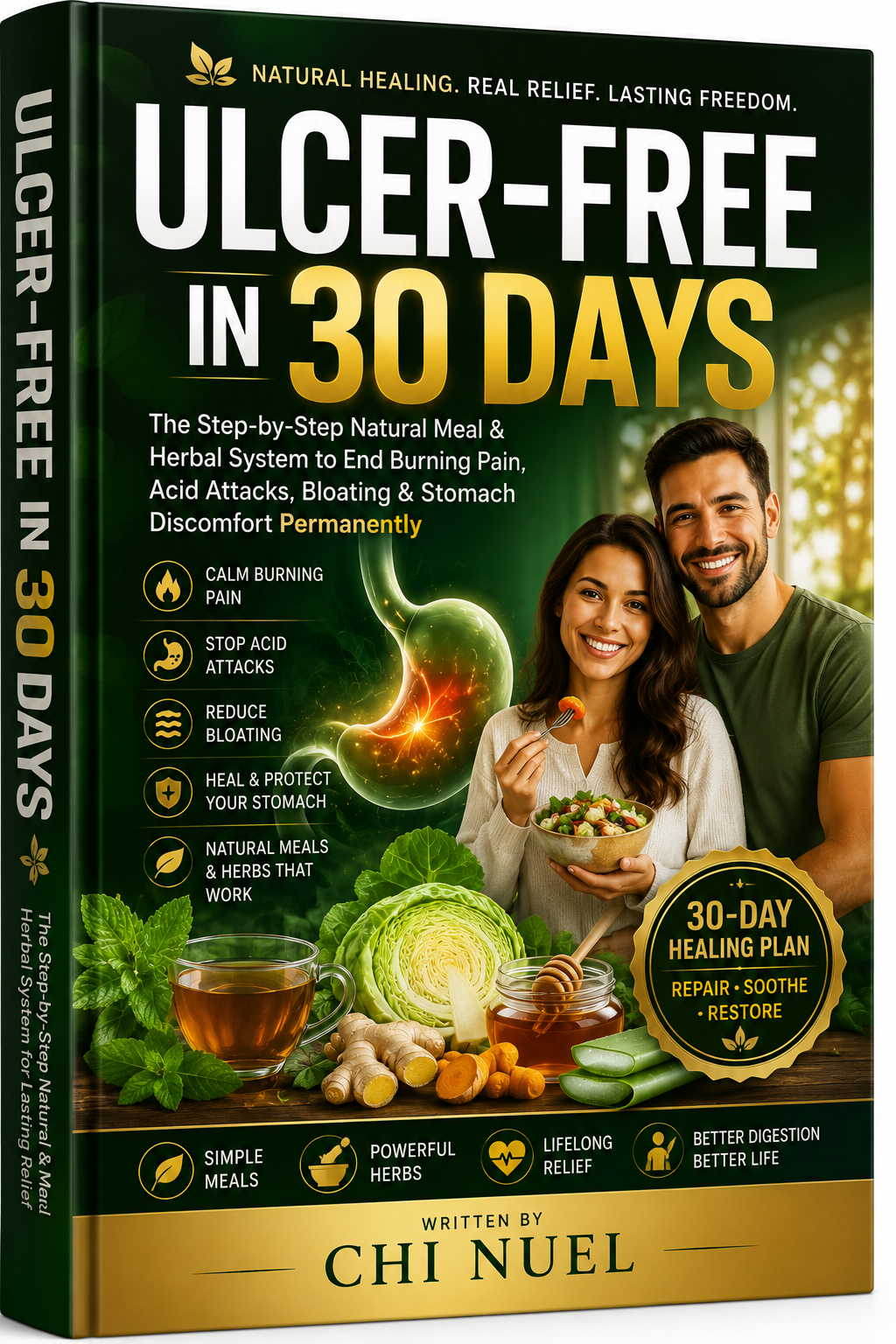
Everything Mama Chidinma taught me — verified, cross-referenced with nutritional science and herbal research, and written in plain language so you can begin tonight. No jargon. No complicated procedures. Just the clear, complete roadmap your stomach has been waiting for.
- The Ulcer-Free 30-Day Healing System™ — The Core Protocol (Page 4): The exact daily sequence — specific foods, herbs, and habits in the precise order your stomach needs them. This is the foundation everything else builds on.
- The Stomach Lining Repair Blueprint (Page 12): The specific nutrients and natural compounds scientifically shown to rebuild the mucus barrier — your stomach's protective shield — so the acid never reaches raw tissue again.
- The 12 Healing Herbs with Exact Dosages (Page 19): How to prepare them, when to take them, and how to source every ingredient from any Nigerian market for under ₦5,000 total.
- The #1 Mistake Ulcer Sufferers Make (Page 27): The thing almost every person with recurring ulcers is doing without knowing it — the habit that keeps recreating the conditions for pain every single time.
- The Ulcer-Safe Food & Lifestyle Guide (Page 33): Exactly what to eat, what to stop, and — importantly — the beloved Nigerian foods you do not have to give up permanently.
- The Hidden Acid Triggers in Daily Life (Page 41): The common household habits, stress patterns, and medication interactions that feed the problem from the inside, even when your diet is perfect.
- The Monthly Maintenance Protocol (Page 49): How to keep the healing permanent — the simple routine that stops the ulcer from ever finding its way back once you have sent it away.
- The Severe-Case Extended Protocol (Page 54): For those who have had ulcers for more than three years, or who have tested positive for H. pylori multiple times — a deeper, extended version of the programme.
You do not need to travel anywhere to do this. You do not need a prescription or a hospital visit. Everything you need is available at your local market or any standard Nigerian pharmacy. Total cost of materials? Less than ₦5,000 — a fraction of what most people spend on a single month of antacids.
Compare That to What You Have Already Been Spending
- Omeprazole / Lansoprazole (monthly): ₦3,000–₦6,000 — Suppresses acid but never repairs the lining. The moment you stop, the burning returns.
- Antacid kits (Gestid, Mucaine, Ulcergel monthly): ₦4,000–₦8,000 — Neutralises acid temporarily. Does nothing for the underlying damage. Many people take these for years.
- Triple therapy antibiotics (H. pylori treatment): ₦15,000–₦30,000 per course — Kills the bacteria but does not repair the lining the bacteria damaged. High recurrence rate without dietary intervention.
- Private gastroenterologist consultation: ₦20,000–₦50,000 — Diagnoses the problem but rarely addresses the nutritional and lifestyle root causes. Typically ends with another prescription.
- Endoscopy and diagnostic tests: ₦30,000–₦80,000 — Confirms the damage but does not reverse it. Many people do this more than once because they keep recurring.
- The real cost — the one nobody puts a number on: The meals missed. The sleep lost. The energy gone. The relationship affected. The freedom you stopped believing you could have again. That one has no price tag. But it has been adding up every single day.
How Much Does This Guide Cost?
Let me be transparent with you. Here is what it cost to create this guide properly:
A fair price for this would be ₦19,800. And honestly, given what a single gastroenterologist consultation costs in Lagos, that would still be extraordinary value.
But I know what times are like. I know that the person reading this has already spent more than they wanted to on things that did not work. I know that asking for trust again requires making it easy.
So if you take action today —
Today's Special Price — Limited to First 200 Women
Original Price: ₦19,800
This price is only for the first 200 people who act today. When those spots are gone, the price returns to ₦19,800.
YES — Get Instant Access for ₦5,800Once You Click That Button, Here Is What Happens
- You are taken directly to the secure payment page. It accepts all major cards, bank transfer, and USSD. The page is fully encrypted and handled by Selar — Nigeria's most trusted digital product platform.
- You complete your payment in less than two minutes. Your details are private and secure. No one else sees them.
- Your complete guide — plus all 5 bonus PDFs — is delivered instantly to your WhatsApp number and your email address. Within 60–90 seconds of payment confirmation, everything is in your hands.
It is me, Chi Nuel. As long as your payment is confirmed, your access is 100% guaranteed and instant. No waiting. No manual process. Straight to your phone.
What Happens In The First 7–14 Days
Real conversations. Real women. Real results.
WAIT — I Have Something Special For You…
If you are one of the first 200 people who act today, you will receive these 5 additional guides completely free. Each one was created to fill a specific gap — the emergencies, the cooking confusion, the stress cycle, the bacteria problem, and the shopping uncertainty — that the main guide alone cannot fully cover.
Here is everything you receive:
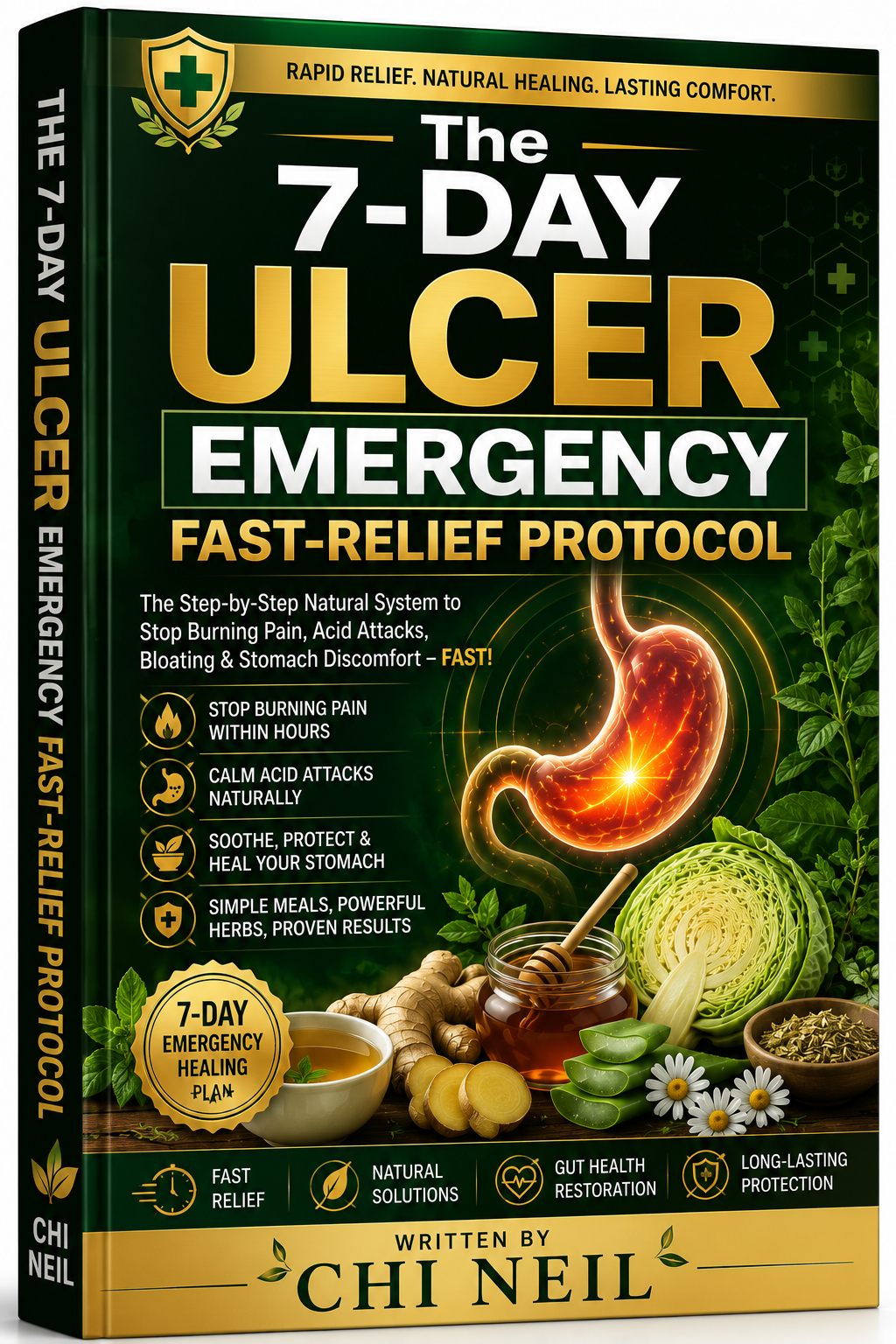
For the days when the pain is unbearable and you need relief right now — not in thirty days. This short, targeted protocol gives you a day-by-day rescue plan for your worst flare-ups, including an SOS relief drink you can make from your kitchen in under three minutes. A must-have for everyone who buys the main guide.
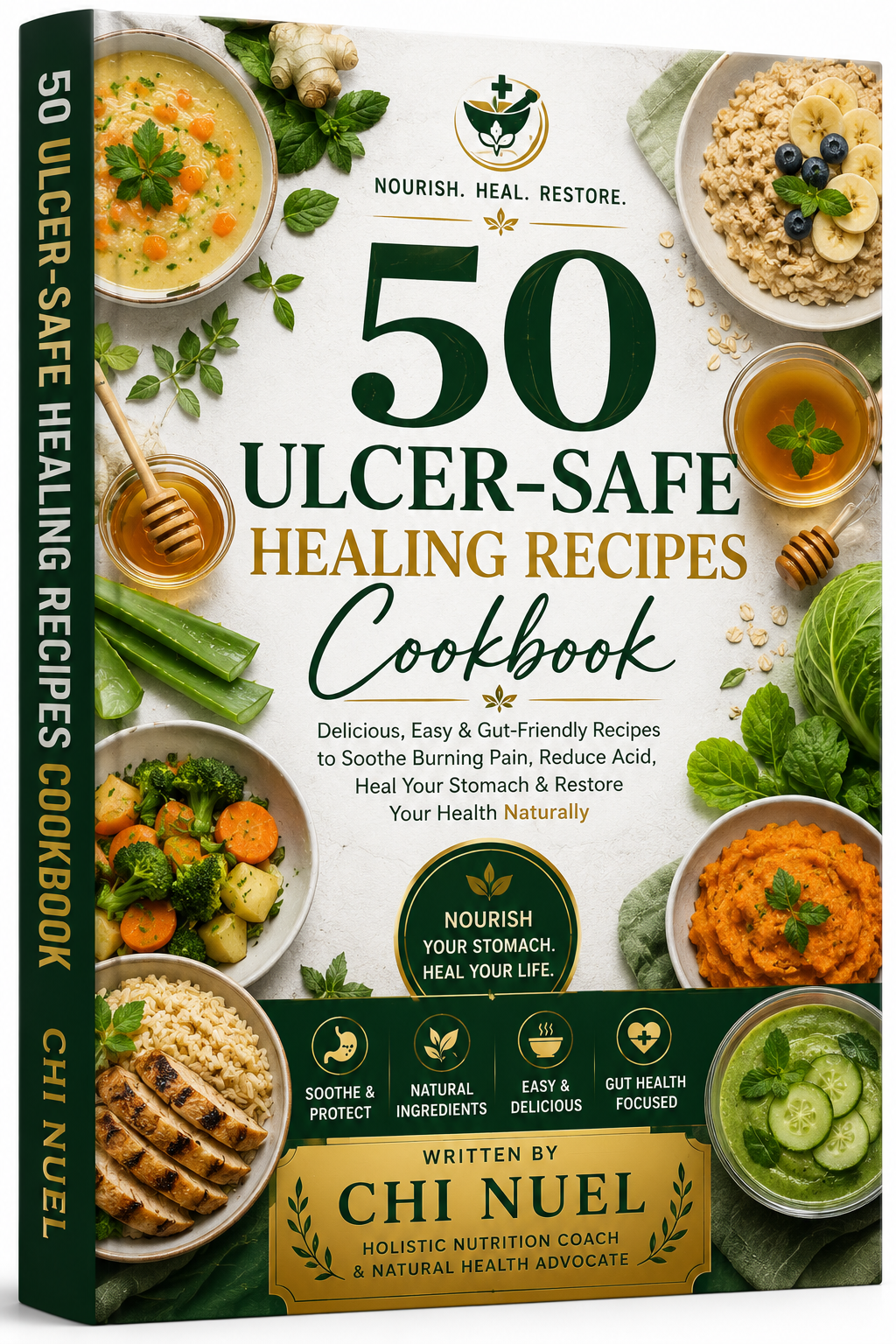
Fifty delicious, satisfying recipes — including Nigerian soups, rice dishes, breakfasts, snacks, and herbal drinks — that are completely safe for ulcer healing. This is the proof that eating for your stomach does not mean eating boring, joyless food. Every recipe uses ingredients you can find in any Nigerian market.
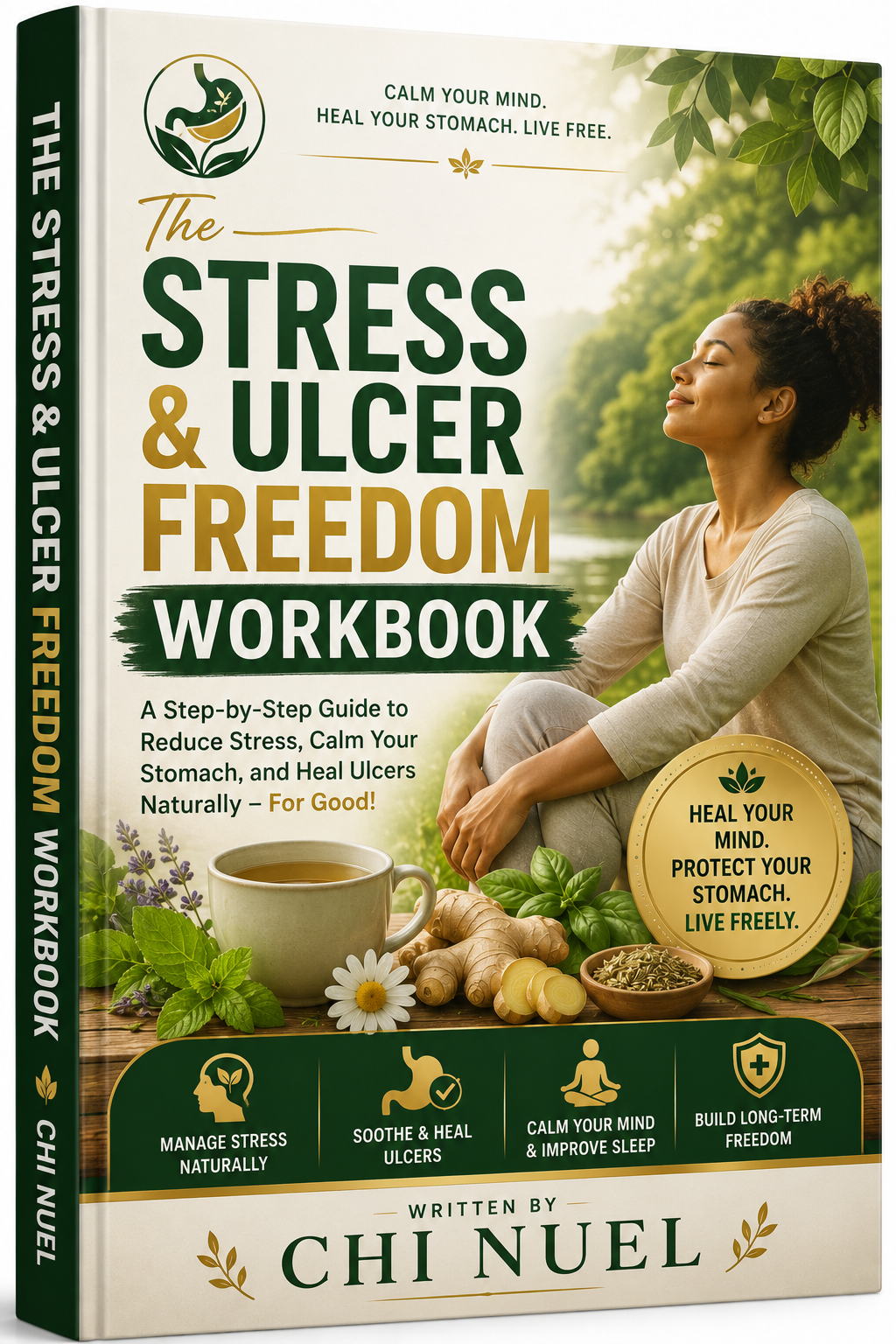
The guide treats the stomach. This workbook treats the nervous system that is constantly flooding it with acid. Simple exercises, breathing techniques, journaling prompts, and a guided forgiveness practice that many women report reduced their stomach tension within days. Stress is the silent recreator. This workbook breaks the cycle.
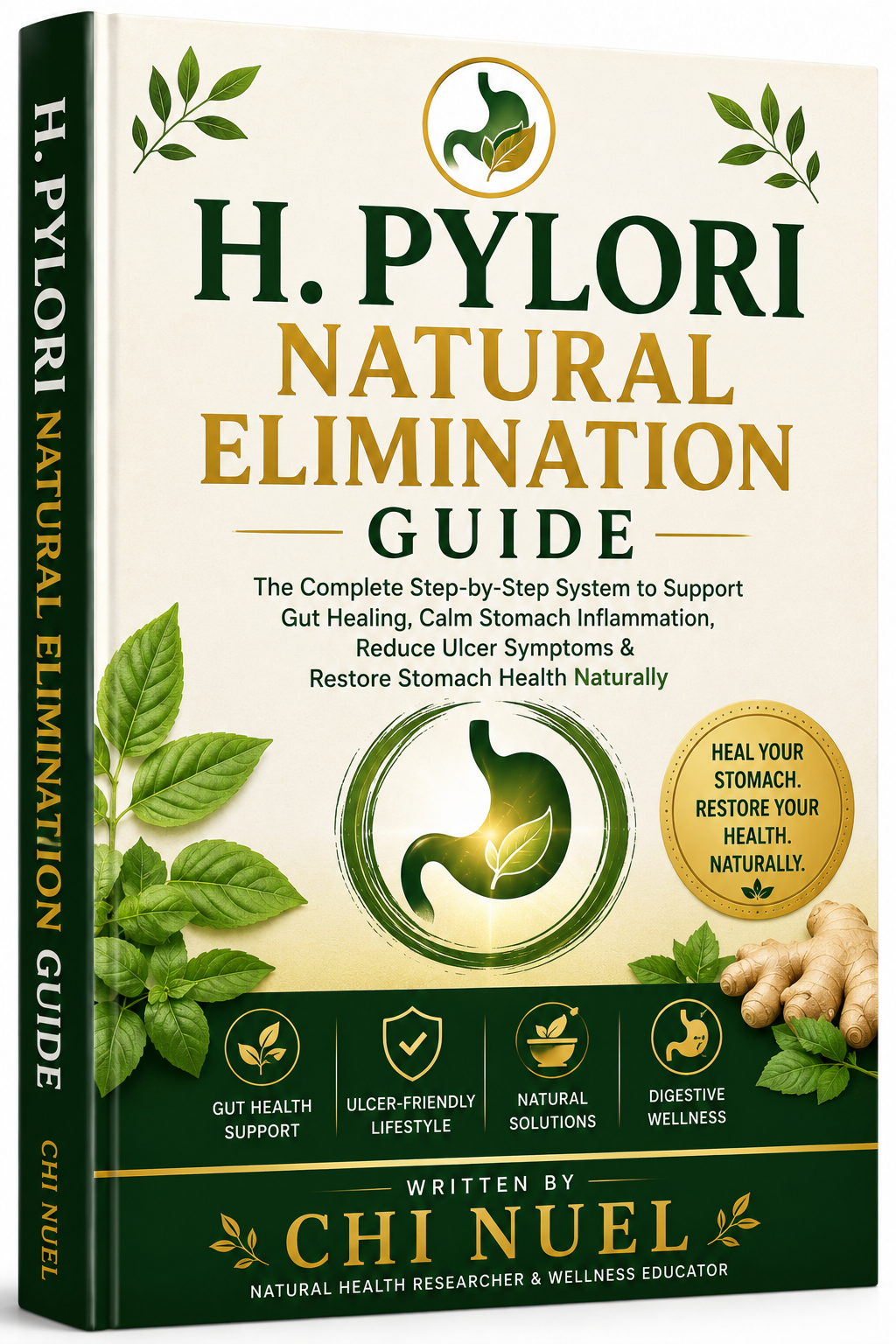
If H. pylori is your problem — and it is behind 70% of all stomach ulcers — this bonus gives you the complete eight-herb natural protocol proven in clinical research to inhibit and eliminate H. pylori. Includes guidance on how to combine it with any antibiotic treatment your doctor has prescribed, so both approaches strengthen each other.
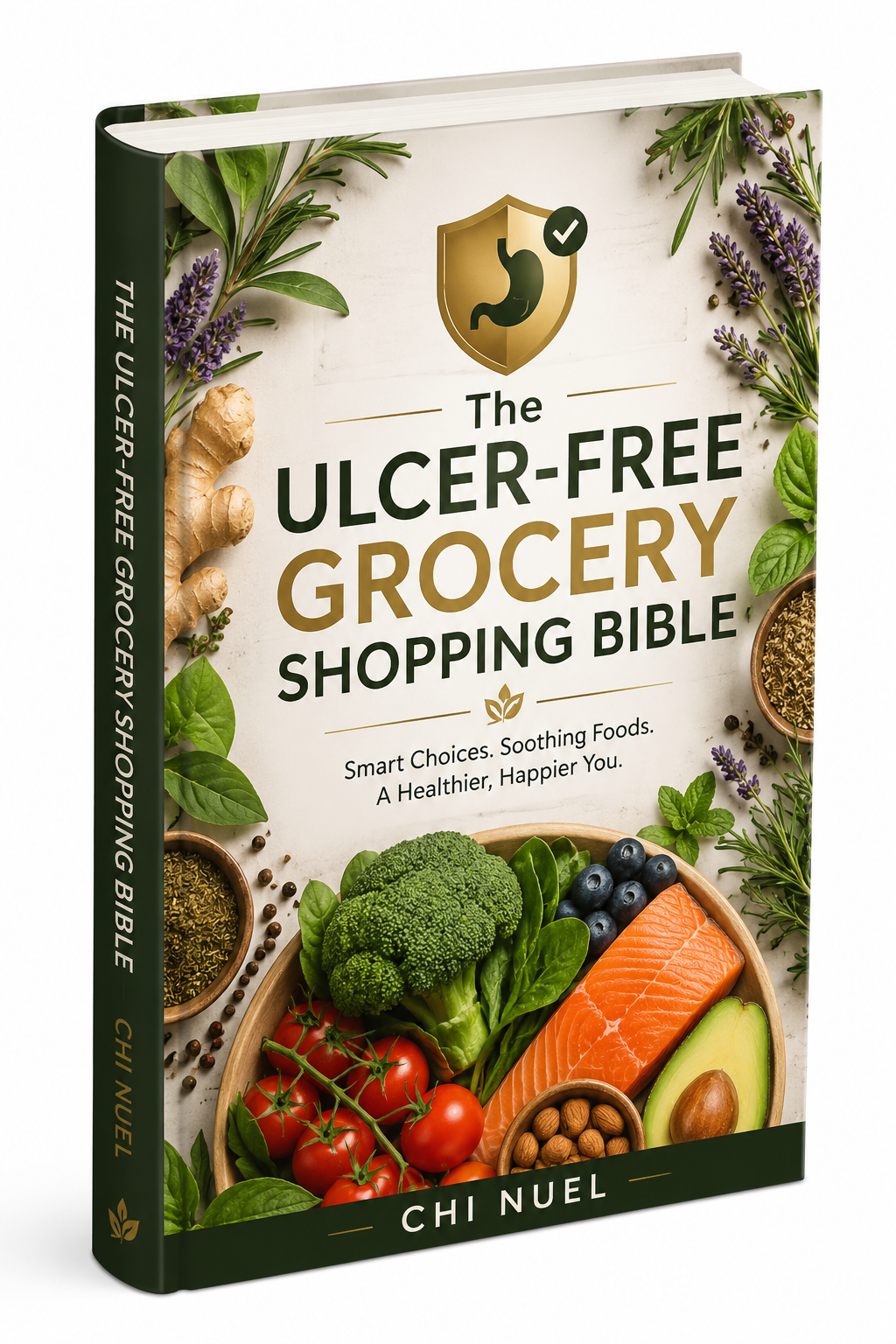
Walk into any market with complete confidence. A comprehensive guide to exactly what to buy, what to leave on the shelf, how to read Nigerian food product labels for hidden acid triggers, and how to build your complete healing pantry on any budget. Includes a market-ready shopping list you can screenshot and take with you today.
Everything You Are Getting Today
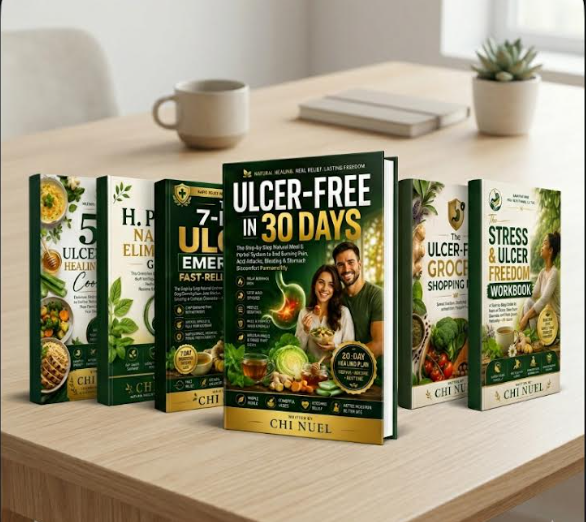
- Ulcer-Free in 30 Days — The Complete Main Guide
₦19,800 - BONUS #1: The 7-Day Ulcer Emergency Fast-Relief Protocol
₦7,000 - BONUS #2: 50 Ulcer-Safe Healing Recipes Cookbook
₦9,500 - BONUS #3: The Stress & Ulcer Freedom Workbook
₦6,000 - BONUS #4: H. Pylori Natural Elimination Guide
₦8,500 - BONUS #5: The Ulcer-Free Grocery Shopping Bible
₦5,000
Right Now, You Have Two Choices
If You Close This Page:
- Tomorrow morning you reach for the antacid again
- The night pain returns on schedule
- Another month of money spent on medication that manages but never heals
- You keep missing meals, declining invitations, eating fear instead of food
- The burning carries on recreating itself — because the soil was never changed
If You Act Today:
- By Day 5, the first real shift — less burning, better sleep
- By Day 14, eating more freely than you have in years
- By Day 30, a stomach that has finally been given the right conditions to close the wound
- A complete system, 5 bonus guides, and a clear roadmap — in your hands in 60 seconds
- The freedom to eat, sleep, and live without your stomach running the whole show
Ulcer-Free in 30 Days — Complete Bundle
Main Guide + All 5 Bonuses
Original Price: ₦19,800
One-time payment. Instant delivery. First 200 people only at this price.
GET INSTANT ACCESS NOW — ₦5,800🛡 30-Day Money-Back Guarantee
Follow the Ulcer-Free 30-Day Healing System™ consistently for 30 days — the meal protocol, the herbal steps, the daily habits — and if you do not feel a meaningful, noticeable improvement in your digestive comfort and symptoms, I will refund your full payment. No forms, no interrogation, no questions. Your trust matters more to me than the ₦5,800.
One Last Thing…
Picture yourself one month from today.
Will you wake up without reaching for the antacid first?
Will you sit at the table with your family and eat a full meal without fear?
Will you sleep through the night — the whole night — without acid waking you at 3 a.m.?
Will your husband reach for your hand across the table and find you fully present, not managing, not monitoring, just there?
Will you remember what it felt like to be a person whose stomach was not the loudest thing in the room?
Now picture yourself one month from today if you close this page.
The same burning. The same antacids. The same careful, joyless food. The same quiet resignation. The same money spent on the same things that keep not working.
The difference between those two versions of you is a decision you make in the next sixty seconds.
I Choose Healing — Get Instant Access
If you have read this far and you are still hesitating —
Let me ask you something honestly.
You have spent ₦3,000 on antacids this month. ₦6,000 on a pharmacy visit. ₦15,000 on antibiotics that cleared the bacteria and then watched it return. You did not hesitate on any of those.
You hesitate here — on a ₦5,800 guide that gives you the complete, permanent solution — because somewhere, quietly, you do not fully believe you deserve to be permanently well.
You have been managing this for so long that management has become your identity. You are the person with the ulcer. You are the person who cannot eat pepper. You are the person who carries antacids in every bag.
You do not have to be that person anymore.
If you cannot invest ₦5,800 in the permanent healing of your own stomach, ask yourself honestly: what exactly are you waiting for? Another year of burning? Another course of antibiotics? Another doctor who sends you home with a prescription and no answers?
Stop waiting. Stop hesitating. Choose yourself. Your stomach has been asking for this for a long time.
I Am Choosing Myself — Get Access Now
P.S. — Remember: this comes with a full 30-day money-back guarantee. Follow the system for 30 days. If you do not feel a real, meaningful improvement in your symptoms, I will refund every naira. You have nothing to lose and four years of burning pain to say goodbye to.
P.P.S. — The ₦5,800 price is only available to the first 200 people. Once those spots are gone, the price returns to ₦19,800. If you come back tomorrow and the price has changed, please know that I warned you today.
P.P.P.S. — Every single day you wait is another morning reaching for the antacid. Another meal eaten in fear. Another night potentially interrupted. The guide is ready. The ingredients are in your market. The healing is possible. The only thing still missing is your decision.
With love for your healing,
Health Researcher • Nutrition Advocate • Author, Ulcer-Free in 30 Days
Frequently Asked Questions
How will the guide be delivered to me?
Are the ingredients easy to find in Nigeria?
I have had ulcers for more than five years. Will this still work for me?
Can I use this alongside my current medication?
Is the 30-day money-back guarantee real?
Why is this different from everything else I have already tried?
One-time payment • Instant WhatsApp & Email delivery • 30-Day Money-Back Guarantee
Comments (412)
I bought this three weeks ago and I am almost at Day 21. The difference is real. I came back to say so here because I was skeptical when I read these comments the first time. For anyone who is hesitating — do not hesitate. Follow the instructions exactly and your body will respond. Mine did.
The part about acid-suppressing drugs creating a rebound effect — I finally understood why my symptoms always come back worse after stopping omeprazole. Nobody explained this to me in 5 years of treatment. This guide did it in one chapter. Worth every naira.
The 50 recipes bonus alone is incredible. I genuinely thought I was going to be eating pap for the rest of my life. I made the jollof version from the cookbook on Friday and had no reaction. JOLLOF. I am free 😭
My husband bought this for me after watching me suffer for two years. I cried when he gave it to me — not because of the gesture (though it was sweet) but because I had stopped believing anything would work. I am on Day 17. The night pain is completely gone. I sleep like a baby now. My husband says I look five years younger. I say I feel five years younger.
Question for anyone who has finished — does the H. pylori bonus work alongside standard antibiotic treatment or only as a standalone? My doctor just prescribed triple therapy again. I want to do both.
Maryam — yes, the H. pylori bonus is specifically designed to work alongside antibiotic treatment. The guide explains how to time the herbal protocol around your antibiotic doses to maximise effectiveness and protect your gut bacteria at the same time. Many women have done exactly this with great results.
The Stress Workbook is something I did not know I needed until I started it. I thought my stomach problem was purely physical. Three sessions into the workbook exercises and I realised how much of my acid problem was being fed by stress I was not even consciously aware of. The breathing technique alone has changed my mornings completely.
Leave a Comment